Research

The Mirzaei Lab investigates how cancer cells interact with the immune microenvironment and how tumor-intrinsic mechanisms regulate cancer progression and therapeutic response.

We integrate cancer immunology, functional genomics, CRISPR-based screening, single-cell technologies, and spatial profiling to uncover mechanisms of immune evasion and therapeutic resistance, with a particular focus on glioblastoma and colorectal cancer.

Research Themes

01

Tumor–Immune Interactions

We investigate how cancer cells communicate with immune cells, particularly tumor-associated macrophages and microglia, to shape the tumor microenvironment.

Our goal is to identify tumor-derived signals and tumor-intrinsic pathways that suppress anti-tumor immunity and determine how these interactions can be therapeutically reprogrammed.
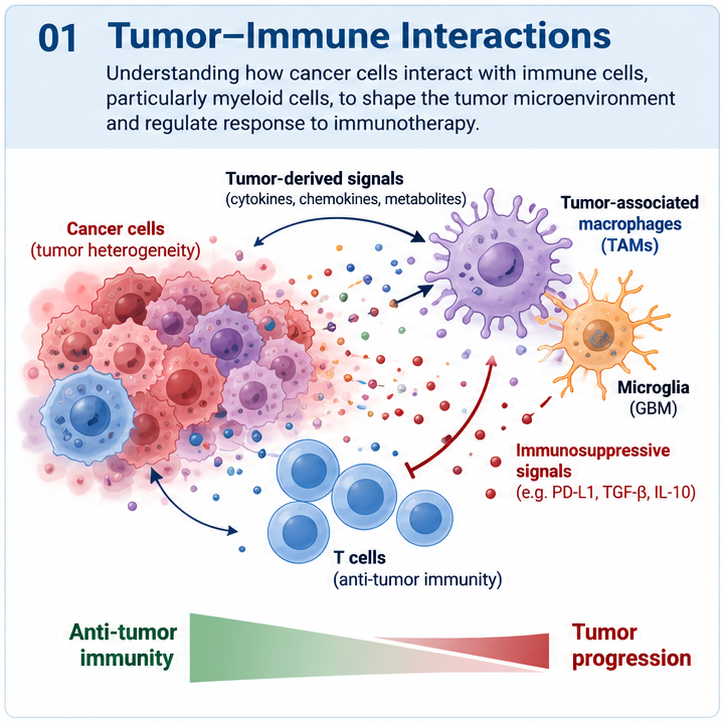
Tumor-immune interactions schematic

02

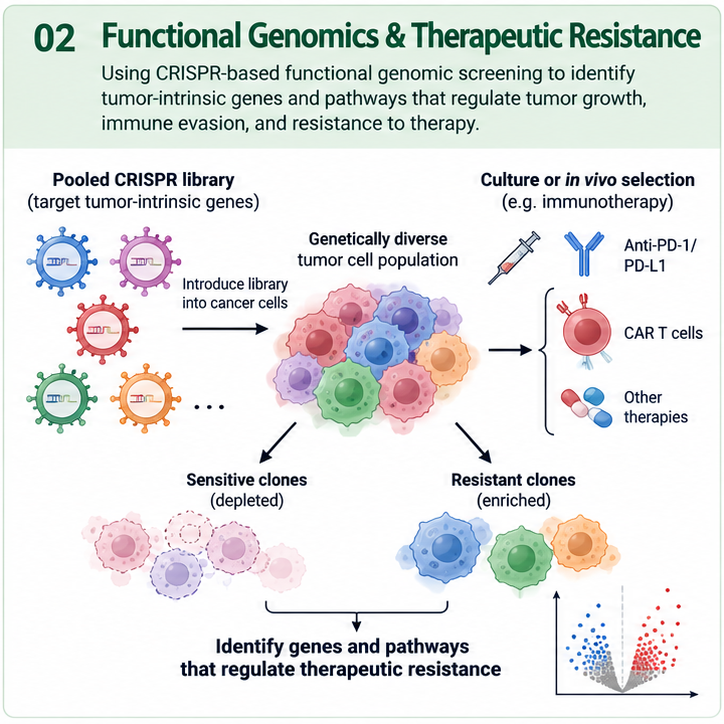
Functional Genomics & Therapeutic Resistance

We use CRISPR-based functional genomic screening to identify tumor-intrinsic genes and pathways that regulate tumor growth, immune evasion, and therapeutic resistance.

By applying genetic screens during immunotherapy, we aim to discover mechanisms that allow cancer cells to survive treatment and identify new therapeutic vulnerabilities.

Functional genomics and therapeutic resistance schematic

03

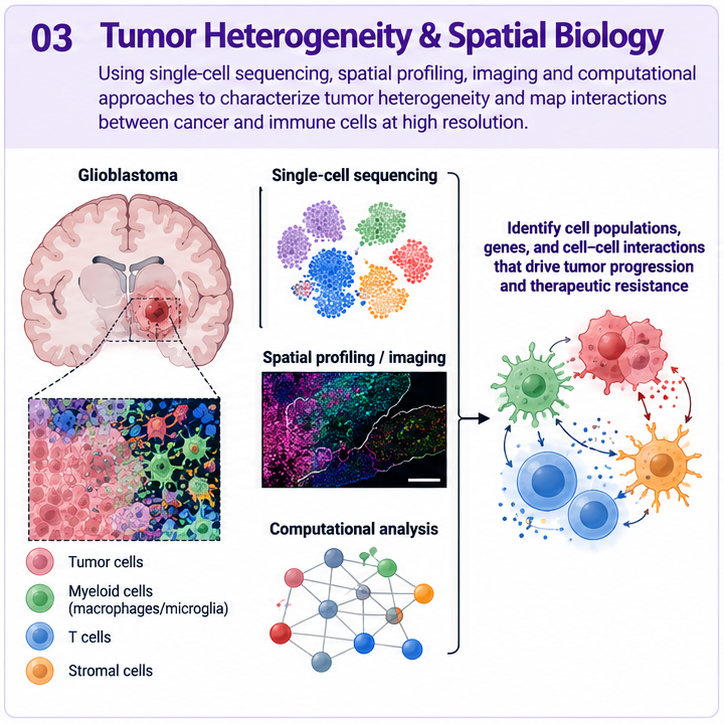
Tumor Heterogeneity & Spatial Biology

We use single-cell sequencing, spatial profiling, imaging, and computational approaches to characterize the cellular diversity and spatial organization of tumors.

By mapping cancer and immune cells at high resolution, we aim to identify the cell populations, molecular programs, and cell–cell interactions that drive tumor progression and therapeutic resistance.

Tumor heterogeneity and spatial biology schematic

Our Goal

By connecting tumor-intrinsic biology with the immune microenvironment, we aim to identify new therapeutic targets and biomarkers and develop strategies that overcome treatment resistance and improve the effectiveness of cancer immunotherapy.